Legal advice basics are essential for anyone navigating everyday legal matters.
From contracts to family issues, understanding your rights and knowing when to seek professional guidance can prevent costly mistakes.
Learn how to get trusted legal help and make informed decisions with confidence.
- What Is Legal Advice? (Definition, Examples & Meaning Explained)
- Legal Advice vs Legal Information: Key Differences You Must Know
- When Do You Need Legal Advice? (Signs, Situations & Risks)
- Who Can Provide Legal Advice Legally?
- Types of Legal Advice (Common Legal Issues Explained)
- Independent Legal Advice (ILA): What It Is & Why It Matters
- Cost of Legal Advice: Fees, Pricing & Affordable Options
- How to Find a Good Lawyer (Step-by-Step Guide)
- How to Prepare for a Legal Consultation (Checklist)
- Important Legal Tips Everyone Should Know
- Common Mistakes to Avoid When Seeking Legal Advice
- Self-Help vs Hiring a Lawyer: What Should You Choose?
- Common Legal Terms Explained in Simple English
- Is Online Legal Advice Safe? (Truth You Should Know)
- Frequently Asked Questions About Legal Advice
- Final Thoughts: Make Smart Legal Decisions with Confidence
- Legal Disclaimer
What Is Legal Advice? (Definition, Examples & Meaning Explained)
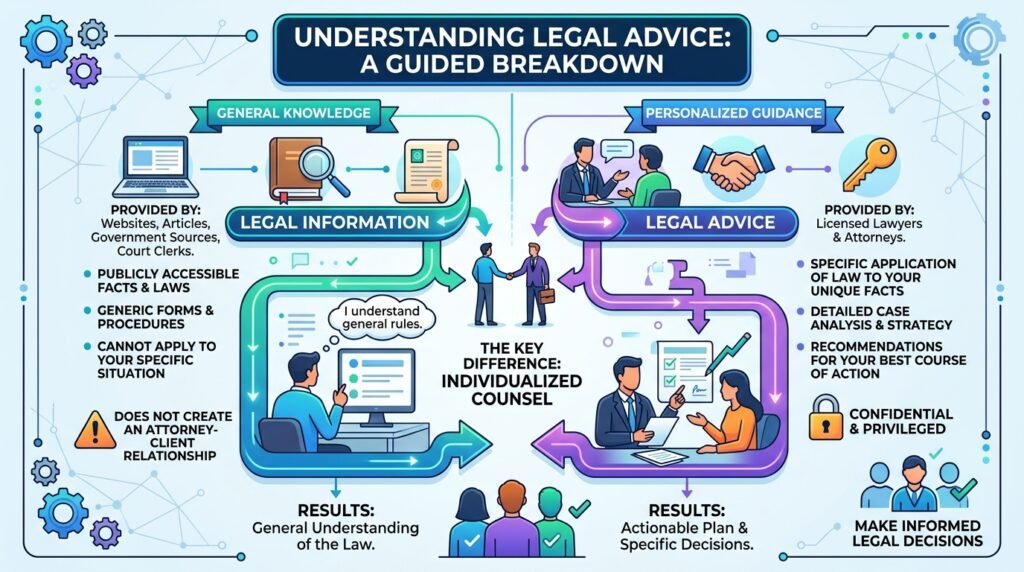
Legal advice basics help you understand how the law applies to your unique situation. It’s not just reading articles online – it’s professional legal guidance tailored to your circumstances.
A lawyer uses their knowledge to give you clear recommendations, helping you protect your rights and make informed decisions.
Legal Advice Explained in Simple Terms
Legal advice is guidance from a licensed lawyer about a specific legal matter. It’s:
- Personalized: Applied to your exact situation.
- Actionable: Tells you what steps to take next.
- Professional: Comes from someone trained and licensed to practice law.
Think of it as a roadmap through your legal challenges – without it, even simple contracts or disputes can become costly mistakes.
Real-Life Examples of Legal Advice
Here are a few situations where legal advice matters:
- Contract Review: A lawyer checks your lease or business agreement and points out clauses that could hurt you.
- Family Law: Guidance on divorce, child custody, or adoption matters.
- Employment Issues: Advice on wrongful termination, workplace harassment, or unpaid wages.
- Property Matters: Help with evictions, foreclosure, or tenant rights.
These examples show how professional legal opinions help you make smart decisions and avoid unnecessary risks.
What Legal Advice Is NOT
It’s important to know the difference: legal advice is not:
- General information you read online.
- Opinions from friends, family, or social media groups.
- Suggestions from unlicensed professionals.
Only a licensed attorney can give true legal advice. Anything else is considered legal information, which can be helpful but doesn’t replace professional guidance.
Legal Advice vs Legal Information: Key Differences You Must Know
Many people confuse legal advice with legal information. Understanding the difference is crucial to avoiding costly mistakes.
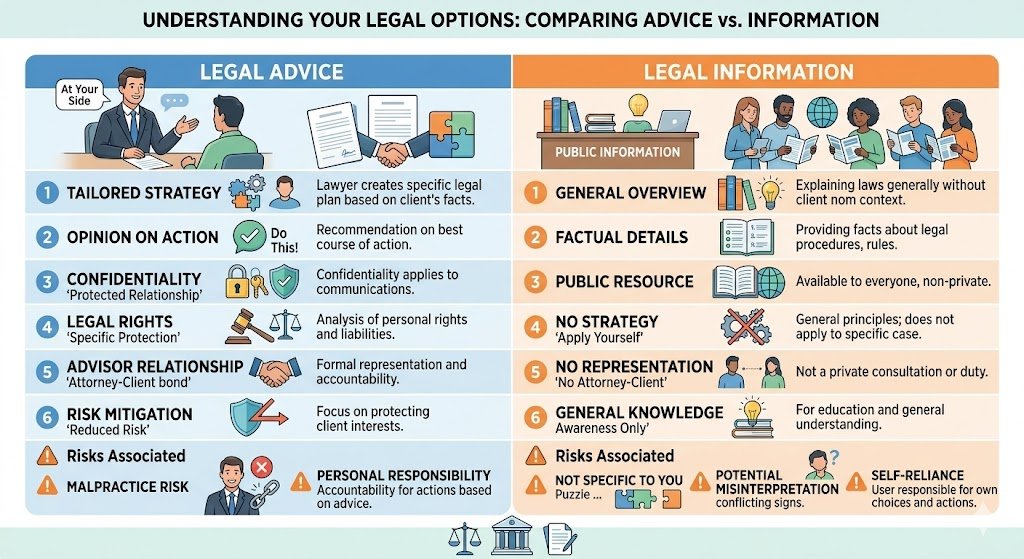
Legal advice is personalized guidance from a licensed attorney, while legal information is general legal info you can find online, in books, or through self-help resources.
Knowing the difference protects your rights and helps you take the right steps when facing legal matters.
What Is Legal Information?
Legal information is general knowledge about the law. It explains rules, processes, and rights, but does not apply to your specific situation.
Examples include:
- Articles on tenant rights or employment laws
- Government websites or legal blogs
- Legal forums and Q&A boards
- Printed guides and self-help books
Legal information can help you understand the basics, but it cannot replace professional legal advice.
Why the Difference Matters (Legal Risks Explained)
Mixing up legal advice and legal information can lead to serious risks:
- Wrong decisions: Acting on general info without consulting a lawyer can cause financial loss or legal penalties.
- Missed deadlines: Legal procedures often have strict timelines; missing them can hurt your case.
- Unauthorized actions: Following incorrect advice might violate laws or contracts.
Only a licensed attorney can provide guidance tailored to your case, reducing risks and giving you confidence in your decisions.
Common Sources of Legal Information
You can safely use these sources for general legal help online:
- Government websites: State bar associations or official legal portals
- Legal blogs and educational sites: Trusted platforms offering articles and guides
- Law school clinics: Provide information on forms and procedures
- Self-help legal books: For understanding basic legal terms and processes
Always remember: while legal information is useful for learning, it doesn’t replace professional legal advice for your unique situation.
When Do You Need Legal Advice? (Signs, Situations & Risks)
Knowing when to hire a lawyer can save you time, money, and stress. Legal issues often pop up in everyday life, from contracts to family matters.
Getting legal advice early helps you make smart decisions, avoid mistakes, and protect your rights.
Common Situations That Require Legal Advice
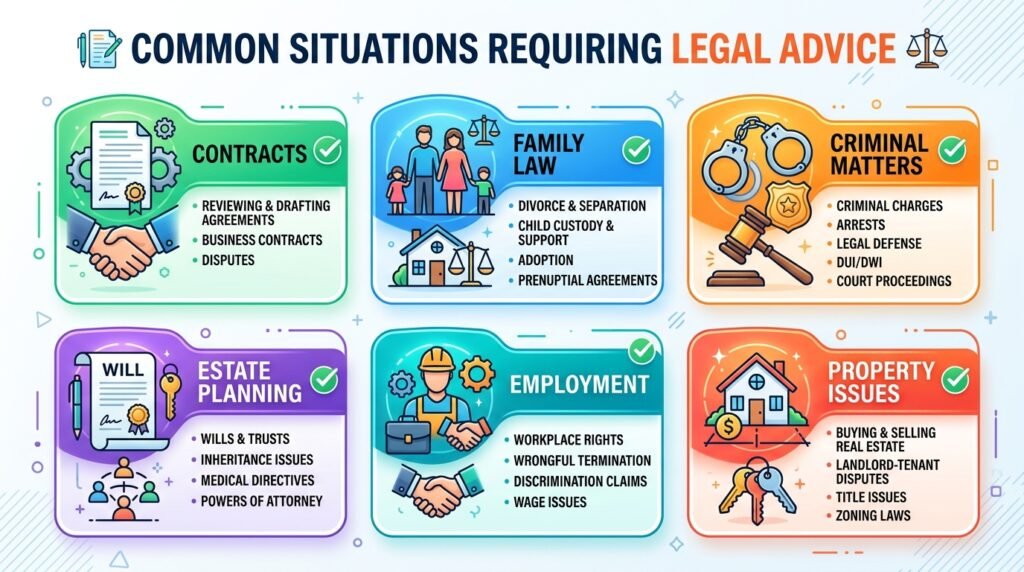
Some situations almost always need a lawyer’s input:
- Signing important contracts: Leases, business agreements, or service contracts
- Family law matters: Divorce, child custody, adoption, or domestic violence cases
- Criminal matters: Arrests, charges, or any police questioning
- Estate planning: Writing a will, trusts, or probate issues
- Employment disputes: Wrongful termination, harassment, or wage conflicts
- Property issues: Evictions, foreclosures, or real estate transactions
Even if the situation seems simple, a quick consultation can prevent costly errors.
Warning Signs You Should Consult a Lawyer
Watch for these red flags that indicate you might need legal guidance:
- Confusing or unclear contracts or documents
- Threats of lawsuits or legal action from another party
- Communication from government or regulatory agencies
- Disagreements with employers, landlords, or service providers
- Uncertainty about your rights or obligations
If you notice any of these signs, don’t wait – getting advice early can prevent bigger problems.
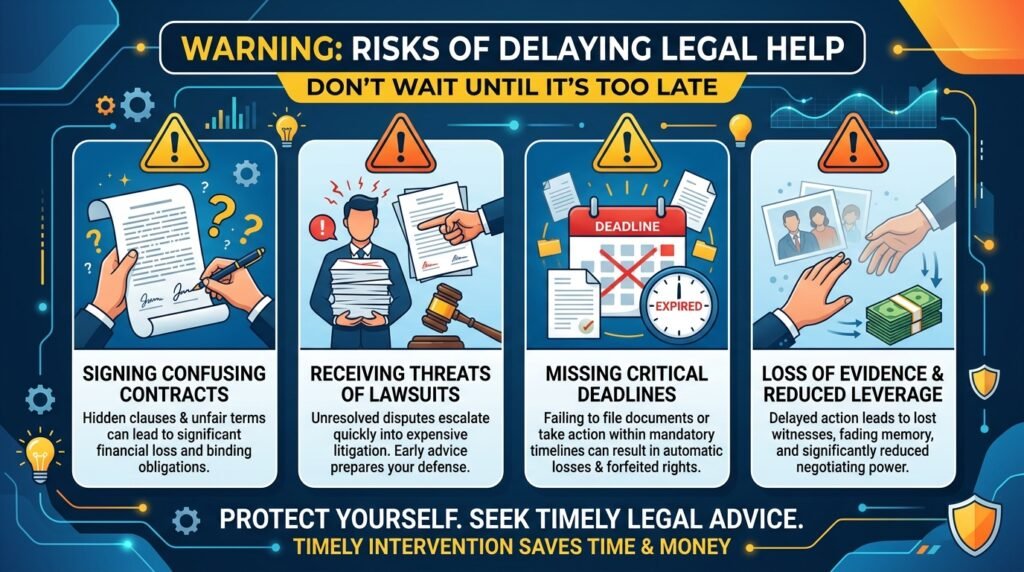
Risks of Delaying Legal Help
Putting off legal advice comes with real consequences:
- Financial loss: Ignoring contracts or fines can cost thousands
- Missed deadlines: Court filings or claims often have strict time limits
- Weakened legal position: Evidence or documentation may be lost
- Stress and confusion: Trying to handle legal matters alone can be overwhelming
A licensed attorney can guide you through the process, protect your rights, and reduce the risk of long-term problems.
Who Can Provide Legal Advice Legally?
Knowing who can give legal advice is crucial to avoiding mistakes and protecting your rights. Only certain qualified professionals can offer personalized guidance tailored to your situation.
Understanding your options – from licensed attorneys to legal aid services – helps you get the right support when it matters most.
Licensed Attorneys (Who Can Give Legal Advice)
A licensed attorney is the primary professional legally allowed to give legal advice. They:
- Have passed the state bar exam and hold a valid license
- Can interpret the law as it applies to your specific situation
- Draft legal documents, represent you in court, and provide actionable recommendations
- Are accountable for their guidance under professional ethics
If you need advice on contracts, family law, criminal matters, or business disputes, a licensed attorney is your safest choice.
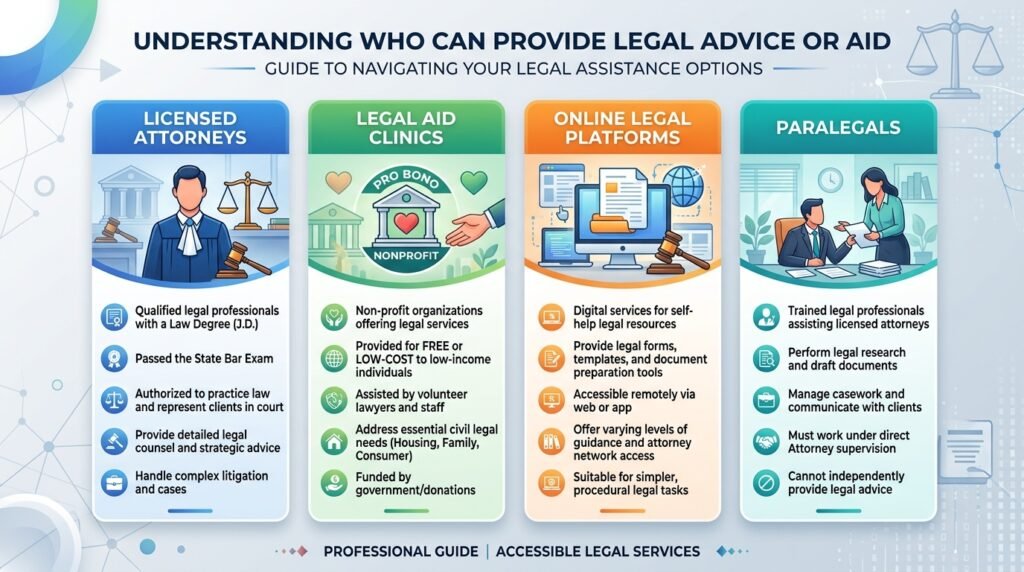
Legal Aid Clinics & Free Legal Services
Not everyone can afford a private lawyer. Legal aid services and pro bono lawyers can help:
- Nonprofit legal aid organizations offer free or low-cost assistance
- Services often cover family law, housing disputes, and civil rights issues
- Law school clinics allow supervised students to provide guidance on simple matters
These options are reliable for those who qualify, but availability may vary by state or location.
Online Legal Advice Platforms (Pros & Cons)
Online platforms like RocketLawyer or LegalZoom provide legal guidance at lower costs. Keep in mind:
Pros:
- Affordable and convenient
- Access to document templates and initial consultations
Cons:
- Often provide legal information, not personalized advice
- Cannot replace licensed attorneys for complex issues
Use these platforms as a starting point, but always verify information with a qualified lawyer for your specific case.
Role of Paralegals (Limitations Explained)
Paralegals assist lawyers but cannot provide legal advice independently. They can:
- Prepare documents under attorney supervision
- Conduct legal research and case analysis
- Explain general legal procedures
They cannot interpret the law for your case, give recommendations, or create binding strategies. Relying on them alone can put you at risk.
Types of Legal Advice (Common Legal Issues Explained)
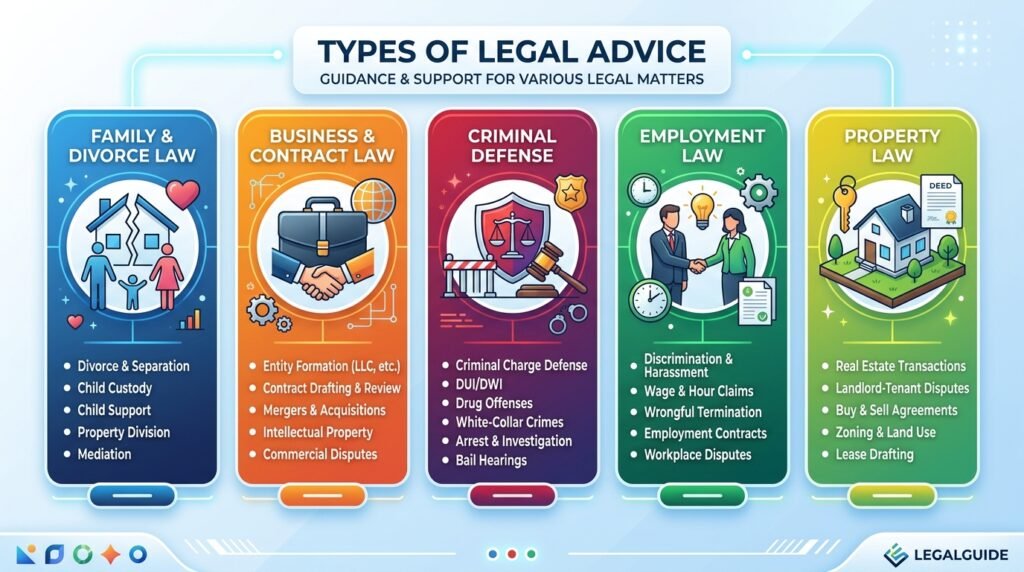
Legal advice isn’t one-size-fits-all. Different situations require different expertise. Knowing the types of legal advice available helps you find the right professional quickly, avoid mistakes, and protect your rights.
Whether it’s family law advice, business contracts, or property disputes, getting tailored guidance is essential.
Family & Divorce Legal Advice
Family matters can be emotional and complex. Family law advice helps with:
- Divorce proceedings and asset division
- Child custody and support agreements
- Adoption and guardianship issues
- Domestic violence protection and restraining orders
A licensed family law attorney can guide you through paperwork, court processes, and negotiation strategies to protect your rights.
Business & Contract Law Advice
Starting or running a business involves many legal obligations. Business legal advice includes:
- Drafting and reviewing contracts and agreements
- Business formation, compliance, and licensing
- Intellectual property protection
- Handling disputes with partners or clients
Professional guidance ensures contracts are fair, legally enforceable, and reduces potential liability.
Criminal Defense & Legal Rights
If you face criminal charges, time is critical. Criminal defense legal advice covers:
- Understanding your rights during arrest and questioning
- Representation in court and plea negotiations
- Guidance on criminal record expungement or appeals
A criminal defense lawyer can protect your legal rights and help minimize penalties.
Employment & Workplace Legal Issues
Workplace problems can affect your career and income. Employment law advice includes:
- Wage disputes, unpaid overtime, or wrongful termination
- Workplace harassment and discrimination claims
- Employment contracts and non-compete agreements
Consulting an employment lawyer early can prevent costly mistakes and protect your career.
Property, Landlord & Tenant Law
Property issues can be stressful, whether you rent or own. Property law advice helps with:
- Lease agreements, rent disputes, and evictions
- Buying or selling real estate and property transfers
- Foreclosure prevention and property rights
A property law expert ensures your rights are protected and guides you through contracts, disputes, or legal proceedings.
Independent Legal Advice (ILA): What It Is & Why It Matters
Sometimes, getting standard legal guidance isn’t enough. Independent Legal Advice (ILA) ensures that you fully understand your rights, obligations, and risks before signing certain agreements.
It’s particularly important in high-stakes or high-risk situations. Knowing the meaning of independent legal advice and how it works can save you from future disputes and protect your interests.
What Is Independent Legal Advice?
Independent Legal Advice (ILA) is professional guidance from a lawyer who is not connected to the other party in a transaction. Unlike standard legal consultations, ILA ensures:
- You receive unbiased advice tailored to your situation
- You fully understand the legal implications of an agreement
- Your rights are protected against potential conflicts
ILA is often documented in writing to confirm that you have received clear, impartial advice.
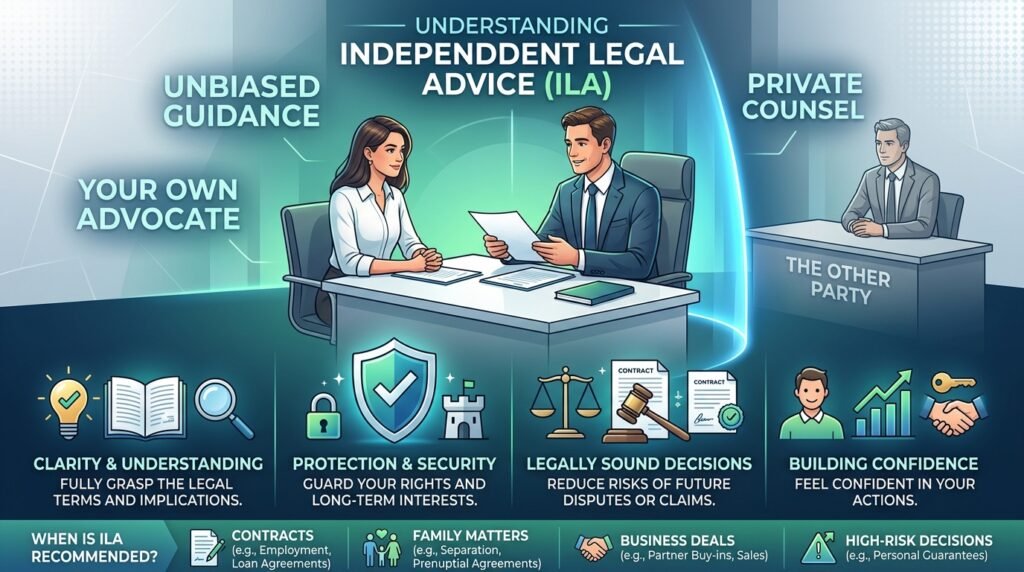
When Is ILA Required?
Certain agreements legally require ILA to be valid. Common situations include:
- Financial agreements between family members or partners (e.g., mortgages, loans, or guarantees)
- Business buyouts or mergers where one party may be at risk
- High-value contracts where potential liability is significant
- Separation or divorce settlements involving property or finances
In many cases, banks, employers, or courts may insist on ILA to ensure fairness and prevent disputes later.
Benefits of ILA in High-Risk Agreements
Getting Independent Legal Advice provides several advantages:
- Clarity: You fully understand your obligations before committing
- Protection: Reduces the risk of future legal challenges or claims of misunderstanding
- Confidence: Gives peace of mind that decisions are made with full knowledge
- Compliance: Ensures agreements meet legal requirements and are enforceable
For anyone entering a high-risk agreement, ILA is a key safeguard. It protects you, prevents future disputes, and ensures all parties act transparently.
Cost of Legal Advice: Fees, Pricing & Affordable Options
One of the biggest questions people have is, “How much does legal advice cost?”
Understanding legal fees and affordable options can help you get the help you need without breaking the bank.
Knowing your options – from free legal advice to paid consultations – lets you plan and avoid surprises.
Free vs Paid Legal Advice
Not all legal help costs money. Here’s a quick comparison:
| Type | What You Get | Who It’s For | Cost |
| Free Legal Advice | Basic guidance, answers to simple questions, legal forms | Low-income individuals, first-time inquiries | $0 |
| Paid Legal Advice | Full consultation, personalized recommendations, representation | Complex cases, contracts, lawsuits | Varies (see below) |
Free services are great for simple questions or general guidance, but for contracts, disputes, or court cases, a licensed attorney’s paid advice is often necessary.
Fee Structures (Hourly, Flat Fee, Contingency)
Lawyers may charge in different ways depending on the type of work:
- Hourly Rate: You pay for each hour worked. Common for ongoing cases or consultations.
- Flat Fee: A fixed price for specific services like drafting a will or reviewing a contract.
- Contingency Fee: The lawyer gets a percentage of the settlement if you win. Often used in personal injury or compensation cases.
Knowing the fee structure upfront prevents surprises and helps you choose a lawyer that fits your budget.
Factors That Affect Legal Costs
Several elements influence how much legal advice costs:
- Case complexity: More complex cases require more time and expertise.
- Lawyer’s experience: Senior attorneys may charge more, but bring specialized skills.
- Location: Legal fees vary by city and state.
- Urgency: Rush cases or immediate consultations can increase fees.
- Documentation & Research Needed: Extra work, like contracts, evidence review, or court filings, can add to the cost.
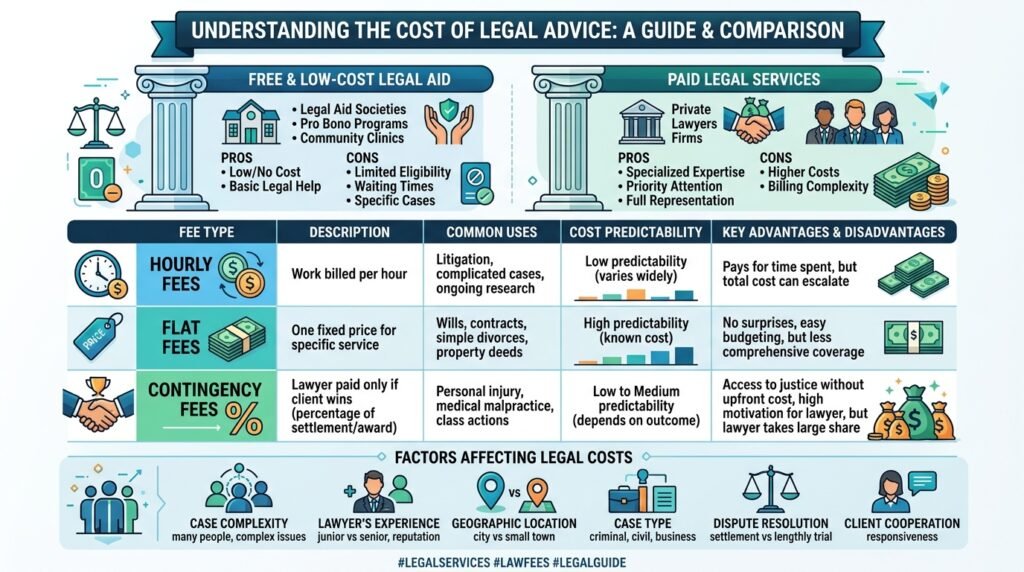
Low-Cost & Free Legal Help Options
If you need affordable legal help, consider these resources:
- Legal Aid Organizations: Nonprofits offering free or low-cost advice for civil matters.
- Pro Bono Lawyers: Attorneys volunteering time for people who cannot afford fees.
- Law School Clinics: Supervised law students who assisted with documents and provided advice.
- Online Platforms: Websites like LegalZoom, RocketLawyer, or ABA Free Legal Answers can guide at minimal cost.
By knowing your options, you can get the legal help you need without overspending. Always ask about fees upfront and confirm if any consultation is free before scheduling.
How to Find a Good Lawyer (Step-by-Step Guide)
Finding the right lawyer can feel overwhelming, but knowing where to look and what to check makes it much easier.
Whether you’re searching for “find a lawyer near me” or the best attorney for your case, this guide walks you step by step so you can hire with confidence.
Where to Search for Lawyers
Start with trusted sources to avoid scams or unqualified professionals:
- Legal Directories: Platforms like Avvo, FindLaw, and Martindale-Hubbell list lawyers by practice area and location.
- State & Local Bar Associations: Most state bars maintain directories of licensed attorneys in good standing.
- Referrals: Ask family, friends, or colleagues who’ve faced similar legal issues. Personal recommendations are often reliable.
- Law School Clinics: Some universities offer supervised legal services and can connect you with reputable lawyers.
How to Check Credentials & Reviews
Before hiring, verify a lawyer’s background:
- Licensing: Confirm they are licensed in your state and in good standing with the bar association.
- Experience: Look for lawyers specializing in your legal issue, e.g., family law, employment, or property law.
- Reviews & Ratings: Read client testimonials on Google, Avvo, or Yelp, but take online reviews with caution – they may not always reflect real outcomes.
- Disciplinary Records: Check for any past disciplinary actions or complaints through your state bar website.
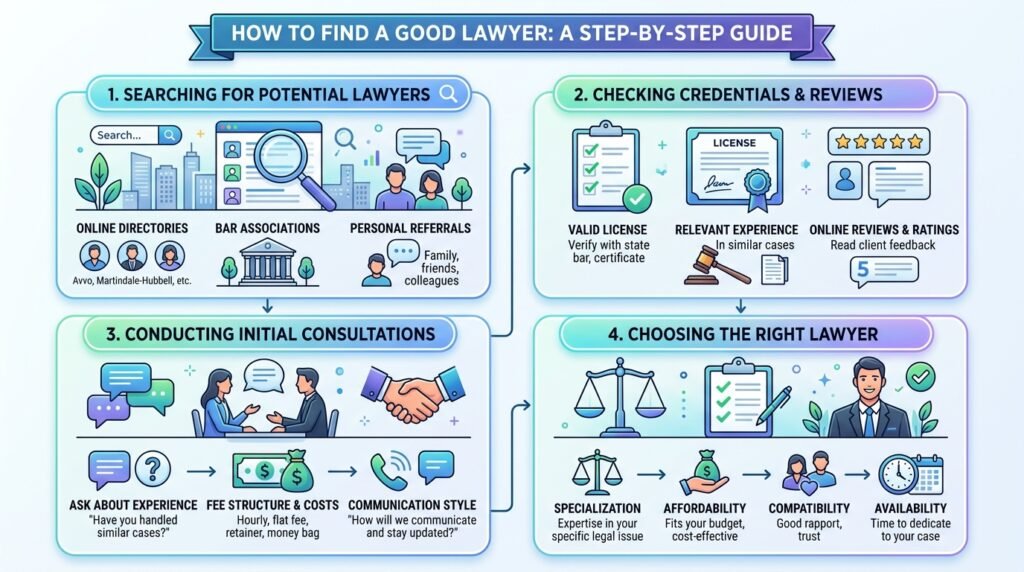
Questions to Ask Before Hiring a Lawyer
Prepare a list of questions for your initial consultation:
- What is your experience with cases like mine?
- What are your fees, and what billing structure do you use? (Hourly, flat fee, contingency)
- How will you communicate updates? Email, phone, or in-person meetings?
- What is the likely timeline for my case?
- Can you provide references from past clients?
Having these questions ready ensures clarity and avoids surprises later.
How to Choose the Right Lawyer for Your Case
Consider these key points before making your decision:
- Specialization: The lawyer’s expertise should match your case type.
- Communication: You should feel comfortable discussing personal details openly.
- Affordability: Ensure their fees fit your budget, and billing terms are clear.
- Compatibility: Trust your instincts – if you feel confident and respected, that lawyer is a good fit.
- Availability: A good lawyer should be accessible and responsive when you need guidance.
By following this step-by-step process, you can confidently find a lawyer near you who meets your needs, protects your rights, and guides you through the legal process with clarity.
How to Prepare for a Legal Consultation (Checklist)
Meeting a lawyer can be stressful if you’re not ready. Proper legal consultation preparation ensures you make the most of your time, get accurate guidance, and avoid missing critical details. Use this step-by-step checklist to walk into your meeting confident and organized.
Documents You Must Bring
Having all relevant paperwork helps your lawyer understand your case quickly:
- Contracts & Agreements: Employment contracts, lease agreements, business deals, or settlement documents.
- Correspondence: Emails, letters, or messages related to your issue.
- Financial Records: Bank statements, invoices, pay stubs, or tax documents.
- Official Notices: Court papers, government letters, or legal notices.
- Identification: Driver’s license, passport, or any proof of identity.
Tip: Organize documents in chronological order or in folders by topic for easy reference.
Questions You Should Ask
Asking the right questions ensures you get clear, actionable legal advice:
- What are my legal options in this situation?
- What is the likely timeline for resolving my case?
- What risks should I be aware of if I delay action?
- How will your fees work, and what billing structure applies?
- Are there alternative ways to solve this issue without going to court?
- What documents or evidence will strengthen my position?
- How often will you update me on progress?
Tip: Write down your questions ahead of time to avoid forgetting anything important.
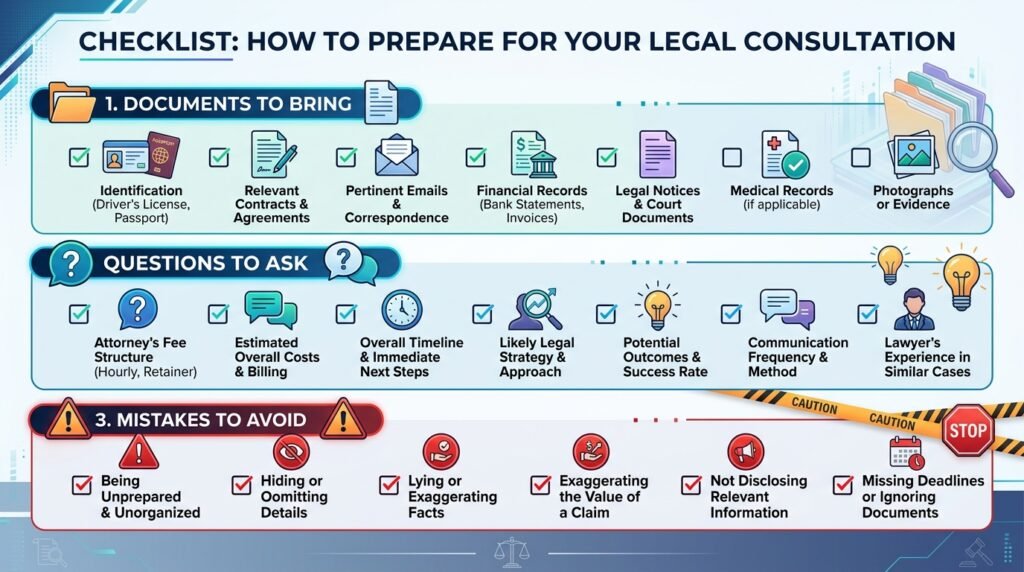
Mistakes to Avoid in Consultation
Avoid common errors that can slow down your case or affect your outcome:
- Being Unprepared: Don’t go without your documents or notes. Missing info can waste time.
- Hiding Details: Always be honest about facts – even if they seem embarrassing or unfavorable.
- Not Asking About Costs: Fees and billing should be clear before you hire a lawyer.
- Relying on Memory Alone: Avoid trying to explain events without proof or records.
- Ignoring Follow-Up Instructions: Take notes and clarify next steps to avoid miscommunication.
Remember: A well-prepared client helps a lawyer provide faster, more accurate, and cost-effective advice.
By following this legal documents checklist and consultation tips, you’ll make the most of your lawyer meeting, whether it’s a free consultation or a paid session.
Important Legal Tips Everyone Should Know
Knowing some essential legal advice tips can protect you from mistakes, scams, and unnecessary stress. These guidelines help you stay safe, make informed decisions, and ensure you’re working with trustworthy professionals.
Always Get Legal Advice in Writing
- Why it matters: Written advice creates a clear record of what was said and agreed upon. Verbal guidance can be misremembered or disputed.
- How to do it: Ask your lawyer to provide summaries, emails, or formal letters outlining recommendations.
- Example: If a lawyer suggests modifying a contract clause, having it in writing protects you if there’s a disagreement later.
Tip: Keep all written advice organized by case or topic for easy reference.
Attorney-Client Privilege Explained
- Definition: Anything you share with your lawyer is confidential and protected by law. This privilege ensures sensitive information isn’t disclosed without your consent.
- Scope: Applies to discussions, emails, notes, and any legal strategy.
- Limitations: Privilege doesn’t cover threats of future crimes or information shared with third parties.
Understanding this protects your rights and encourages open, honest communication with your lawyer.
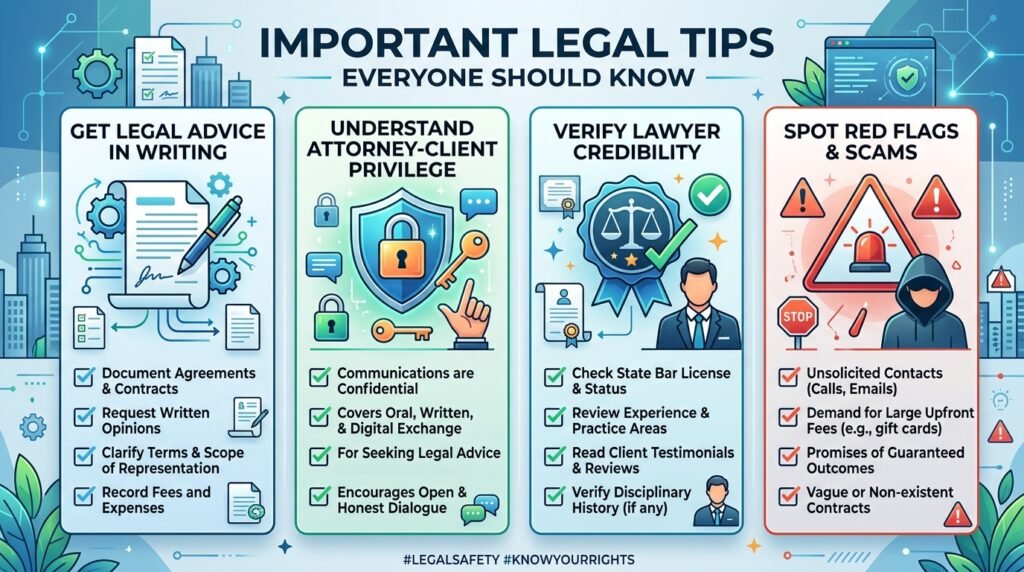
How to Verify a Lawyer’s Credibility
Before hiring, make sure your lawyer is qualified and trustworthy:
- Check licenses: Verify with your state bar association that they are licensed and in good standing.
- Look for experience: Ensure they handle cases in your legal area, like family law, business law, or criminal defense.
- Read reviews & referrals: Look at online reviews, professional references, and recommendations from people you trust.
- Confirm fee structure: Make sure you understand how they charge – hourly, flat fee, or contingency.
Tip: A credible lawyer will always provide clear answers and written agreements for fees and services.
Red Flags & Legal Scams to Avoid
Watch out for warning signs that a lawyer or legal service may be unreliable or fraudulent:
- Promises of guaranteed outcomes or “quick fixes.”
- Unclear or hidden fees
- Pressure to pay upfront before seeing any work
- Unlicensed practitioners posing as attorneys
- Using generic advice without reviewing your documents
Remember: Taking a little extra time to verify credentials and understand advice can save you from costly mistakes.
Following these legal safety tips helps you protect your rights, avoid scams, and make confident decisions with real, licensed legal professionals.
Common Mistakes to Avoid When Seeking Legal Advice
Getting the right legal advice can save time, money, and stress – but many people make avoidable mistakes. Understanding the common pitfalls helps you protect your rights and make smarter decisions.
Confusing Legal Advice with Legal Information
- What happens: Many assume that reading online articles, forums, or legal blogs counts as advice. This is legal information, not personalized guidance.
- Why it’s risky: General info doesn’t consider your unique situation and may lead to mistakes.
- Solution: Always consult a licensed attorney for guidance that applies to your specific case.
Remember: Only a professional with an attorney-client relationship can give valid legal advice.
Trusting Unverified Online Sources
- Danger: Social media posts, chat forums, or unverified websites may provide outdated, incorrect, or biased info.
- Example: Following contract tips from a random Reddit thread could lead to financial or legal trouble.
- Tip: Stick to official legal resources, state bar websites, or trusted law firms for online guidance.
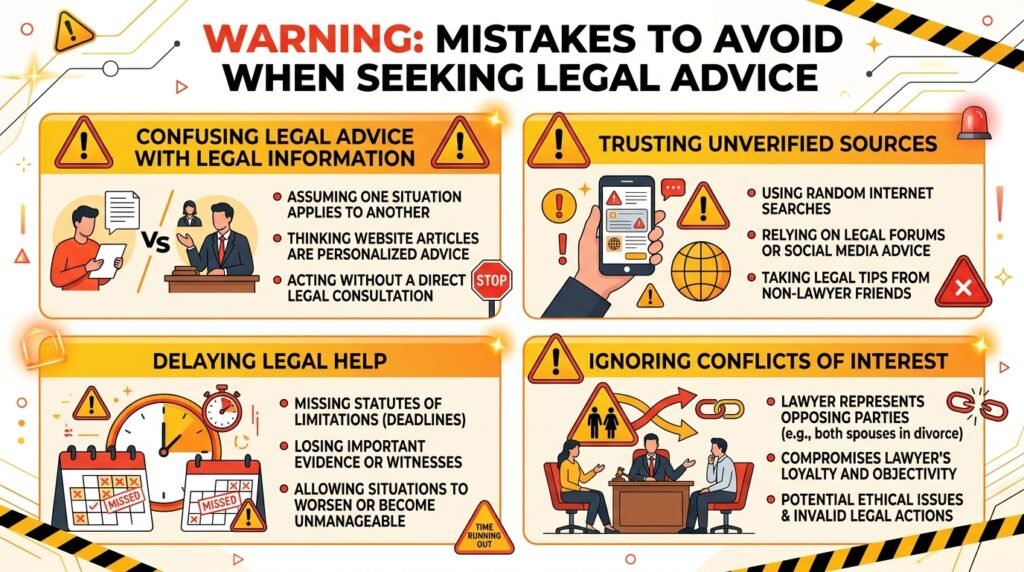
Waiting Too Long to Seek Help
- Risk: Delaying legal consultation can increase costs, limit options, or even cause legal rights to expire.
- Common scenario: Ignoring suspicious lease terms or employment issues until it’s too late.
- Advice: Seek advice early, especially for contracts, disputes, or family matters.
Quick action often prevents small issues from turning into costly legal battles.
Ignoring Conflicts of Interest
- Problem: Some attorneys may have past or current relationships that affect their ability to represent you impartially.
- Red flag: A lawyer representing both you and another party in the same case.
- Solution: Ask about any conflicts of interest upfront and ensure full transparency before hiring.
Checking for conflicts protects your case integrity and avoids surprises later.
Avoiding these legal mistakes ensures your decisions are based on reliable advice, protects your rights, and keeps you out of trouble with online advice pitfalls or delayed action.
Self-Help vs Hiring a Lawyer: What Should You Choose?
Deciding between self-help legal options and hiring a lawyer can feel overwhelming. Knowing when you can handle things yourself – and when professional guidance is necessary – can save time, money, and stress.
When You Can Handle Legal Issues Yourself
Some legal matters are straightforward and can be managed without an attorney:
- Small claims court cases under your local limits
- Simple contracts or agreements with clear, standard terms
- Routine paperwork like name changes or DMV forms
- Online legal templates for basic wills or powers of attorney (from trusted sites)
Tip: Even when doing it yourself, double-check official instructions and deadlines. Mistakes in paperwork can cause delays or denials.
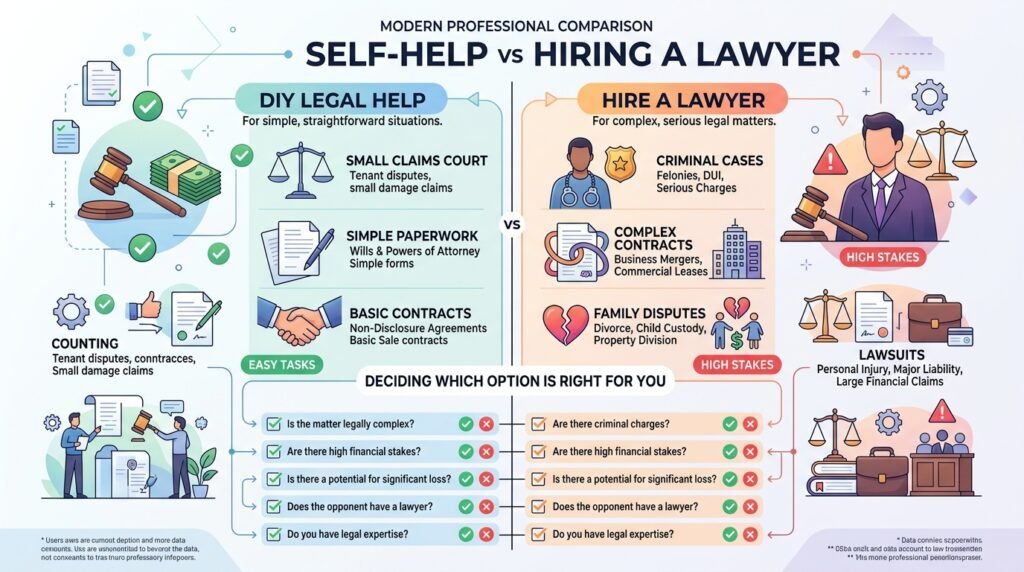
When You MUST Hire a Lawyer
Certain situations require professional legal guidance to protect your rights:
- Complex contracts (business deals, leases, loans)
- Criminal charges or interactions with law enforcement
- Family law disputes (divorce, child custody, adoption)
- Property or real estate conflicts (foreclosure, landlord-tenant disputes)
- Lawsuits or litigation (civil, personal injury, employment cases)
In high-stakes cases, hiring a licensed attorney is essential to avoid costly mistakes.
Quick Decision-Making Checklist
Use this simple checklist to decide:
| Question | DIY Legal Help | Hire a Lawyer |
| Is the case simple and low-risk? | ✅ | ❌ |
| Does it involve money, property, or criminal charges? | ❌ | ✅ |
| Are deadlines strict and complex? | ❌ | ✅ |
| Do you fully understand the law and procedures? | ✅ | ❌ |
| Could mistakes have long-term consequences? | ❌ | ✅ |
Pro Tip: If you’re unsure, a brief consultation with an attorney can clarify whether DIY is safe or if professional help is needed. Many lawyers offer free initial consultations.
Choosing wisely between self-help and hiring a lawyer ensures you save resources, protect your rights, and prevent unnecessary legal trouble.
Common Legal Terms Explained in Simple English
Understanding legal terminology can be confusing, especially when lawyers use words that seem complicated.
Knowing the basics helps you feel confident in legal discussions, documents, or court matters. Below is a simple glossary of key legal terms everyone should know.
Plaintiff
The plaintiff is the person or party who starts a lawsuit. They are the ones claiming that someone else caused them harm or broke the law.
Example: If your neighbor damages your property, you would be the plaintiff if you take the case to court.
Defendant
The defendant is the person or party being sued or accused of wrongdoing in a legal case.
Example: In the property damage case above, your neighbor would be the defendant.
Contract
A contract is a legally binding agreement between two or more parties. It can be written or verbal, but written contracts are easier to enforce.
Key Points:
- Must include an offer, acceptance, and consideration (something of value exchanged)
- Can be used in business deals, rental agreements, or employment arrangements
Liability
Liability means legal responsibility for something, usually resulting from actions or omissions that cause harm or damage.
Example: A driver who causes an accident may have liability for repairing damages or paying medical bills.
Negligence
Negligence is when someone fails to act with reasonable care, leading to harm or loss for someone else.
Example: If a store owner doesn’t clean a spill and someone slips, they could be found negligent.
Tip: Keep this glossary handy when reading legal documents or speaking with a lawyer. Knowing these terms ensures you understand your rights and obligations clearly.
Is Online Legal Advice Safe? (Truth You Should Know)
Many people search for answers online before they talk to a lawyer. It feels quick. It feels free. But is it safe?
The short answer. Sometimes yes. Often no.
Online legal advice can help you learn the basics. It can guide you in simple cases. But it can also mislead you and cause serious trouble if you trust the wrong source.
Let’s break this down in a simple way.
Risks of Social Media & Forum Advice
Platforms like Reddit, Facebook, and Quora are full of legal opinions. But most of them are not from real lawyers.
Here’s where the risk starts.
1. No guarantee of accuracy
- Anyone can post advice
- No proof that they are a lawyer
- Laws change often
Example: A person in Texas may give advice that does not apply in Pakistan.
2. No understanding of your full case
- Law depends on details
- Small facts can change everything
- Online answers are often generic
3. Outdated or wrong information
- Old posts stay online forever
- Legal rules may have changed
- You may rely on something no longer valid
4. No legal responsibility
- Online users are not liable for bad advice
- You cannot take action if the advice harms you
5. Privacy risks
- Sharing your issue online can expose personal details
- Your case may become public
Quick Data Insight
| Source Type | Accuracy Level | Risk Level |
| Social media posts | Low | High |
| Legal forums | Medium | Medium |
| Verified lawyers | High | Low |
When Online Legal Help Is Useful
Online legal advice is not all bad. It can help in the right situations.
Here’s when it works best.
1. Learning basic legal concepts
- Understanding rights
- Knowing legal terms
- Getting a general idea of your case
2. Early research before hiring a lawyer
- Helps you ask better questions
- Saves time during consultation
3. Simple legal issues
- Traffic tickets
- Basic contracts
- Small claims guidance
4. Finding legal resources
- Law firm websites
- Government portals
- Legal guides
Tip: Use trusted legal websites instead of random posts.
How to Verify Legal Information Online
Before you trust any online legal advice, you need to check it carefully.
Here’s how you can do that.
1. Check the source
- Is it a law firm website?
- Is the author a licensed lawyer?
- Look for credentials
2. Cross-check multiple sources
- Don’t trust one answer
- Compare at least 2–3 sources
3. Look for location-specific advice
- Laws differ by country and state
- Make sure it applies to your area
4. Check the date
- Legal info must be up to date
- Avoid old articles
5. Avoid absolute claims
- Be careful with advice like “You will win.”
- Law is not guaranteed
6. Use official sources when possible
- Government websites
- Court websites
- Verified legal portals
Final Thought
Online legal advice can guide you. It should not replace a real lawyer.
Use it to learn. Not to decide.
If your case involves money, risk, or legal action, speak to a qualified lawyer. That step can save you from costly mistakes.
Frequently Asked Questions About Legal Advice
People often feel confused when they need legal help. These common questions can clear things up and help you make better choices.
Is Legal Advice Free?
Sometimes yes. Most of the time, no.
Here’s how it works:
- Many lawyers offer a free first consultation
- Some law firms share basic legal advice FAQs on their websites
- Non-profits and legal aid groups may provide free help for low-income people
But keep this in mind:
- Detailed legal advice is usually paid for
- Complex cases need time and work, which lawyers charge for
Quick breakdown
| Type of Help | Free or Paid |
| First consultation | Often free |
| Detailed legal advice | Paid |
| Legal aid services | Free (if eligible) |
Can Non-Lawyers Give Legal Advice?
Short answer. No.
Only a licensed lawyer should give legal advice.
Non-lawyers can:
- Share general information
- Talk about their personal experience
- Point you to resources
But they cannot legally guide your case.
Why this matters:
- Wrong advice can damage your case
- Laws are complex and change often
- Each case has unique facts
Platforms like Reddit or Quora may look helpful, but most answers come from non-lawyers.
What Happens If Legal Advice Is Wrong?
Wrong legal advice can create serious problems.
Possible consequences:
- Losing your case
- Paying fines or penalties
- Missing deadlines
- Signing bad agreements
Important point:
- If a licensed lawyer gives wrong advice, you may have legal options
- This can fall under professional negligence
But if advice comes from a stranger online, you usually have no protection.
How Do I Find a Trusted Lawyer?
Finding the right lawyer is one of the most important steps.
Use this simple checklist:
1. Check credentials
- Licensed to practice law
- Verified experience
2. Look at reviews
- Client feedback
- Case results
3. Ask clear questions
- Have you handled similar cases?
- What is your success rate?
4. Check communication
- Do they explain things simply?
- Are they responsive?
5. Compare options
- Talk to 2–3 lawyers before deciding
Helpful sources to start your search:
- Law firm websites
- Bar association directories
- Trusted legal websites
Can I Get Legal Advice Online?
Yes, you can. But you need to be careful.
Online legal advice is now common through:
- Law firm websites
- Virtual consultations
- Legal service platforms
Some people also turn to forums or communities like Reddit. These can help with general questions, but they are not reliable for serious issues.
Best use of online legal advice:
- Learn basic information
- Prepare for a lawyer meeting
- Understand your options
Avoid relying on it when:
- Your case involves money, risk, or court
- You need a final decision
Final Thoughts: Make Smart Legal Decisions with Confidence
Legal problems can feel stressful. One wrong step can cost time, money, or peace of mind. That is why legal awareness matters.
You do not need to know every law. You just need to know when to act and who to trust.
Here’s what helps you stay protected:
- Learn the basics before you decide
- Do not rely only on random online legal advice
- Always check facts from trusted legal websites
- Speak to a qualified lawyer for serious matters
Smart legal decisions come down to three simple steps:
- Understand your situation
Know what problem you are facing - Verify information
Cross-check advice from reliable sources - Get expert help when needed
A lawyer can guide you based on your exact case
Why this matters
| Action Taken | Result |
| Ignoring legal advice | Risk of mistakes and losses |
| Relying on wrong sources | Confusion and poor decisions |
| Taking expert help | Better legal protection |
Good decisions protect your future. Take time to think. Check your options. Then act with confidence.
Legal Disclaimer
This content is a legal disclaimer example and is provided for informational purposes only.
- It does not create a lawyer-client relationship
- It should not be taken as professional legal advice
- Laws vary by location and may change over time
You should always consult a qualified lawyer or legal professional for advice about your specific situation.
Use this information as a guide. Not as a final decision.